
History of the Ambulance Stretcher:
Warfare, and the increase in work-related accidents, throughout the 19th century necessitated the evolution of casualty care and stretcher design. This was largely driven by the Red Cross (c.1863) and the St John Ambulance Association (c.1877).
There were a variety of designs in use during this period, though older patient transport mainly consisted of hammocks and wheel-less dandies.
Furley, Headley and the Ashford Litter
Inspired by the Nuess litter used in the Franco-Prussian War (1870-1877) where he volunteered with the Anglo-American Ambulance Unit, Sir John Furley began to develop his own litter and stretcher. Enlisting the help of local wheelwright Paul Headley, Furley sought to create a less cumbersome and more practical ‘ambulance’.
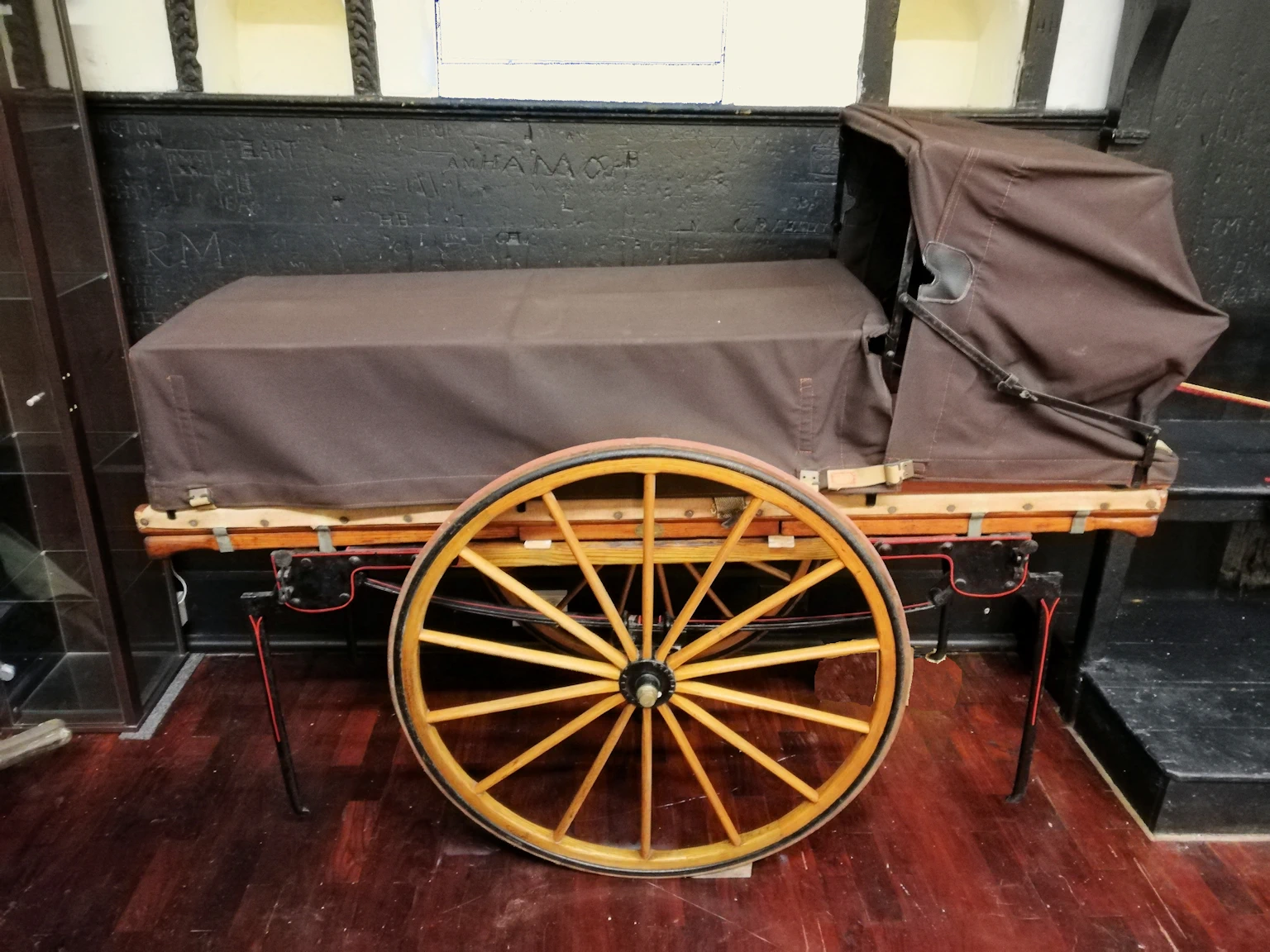
The Ashford Litter was a lightweight and more manoeuvrable two-wheeled cart, consisting of an easily detachable canvas Furley Stretcher and four foldable legs (unlike the other, earlier, iterations such as the Nuess). The spreader bars could also be removed so that the litter could be folded for convenient storage.
Uniquely, the Ashford Litter has a low U-shaped axle, which allows the stretcher-bearer to lift and move the canvas stretcher off the frame, reducing risk created from lifting it over the large wheels.
This design was adopted by the St John Ambulance Association, and produced until the 1930s. These litters, or ‘ambulances’, actually provided the organisation with its name.
Leave a Reply